Spanish Olive Oil Varietals Explained
A guide to Picual, Arbequina, Hojiblanca and Spain's most distinctive olive varieties, and how to choose the right one.
Most people walk down the grocery aisle, grab a bottle labeled "extra virgin olive oil," and never think about what's actually inside. But here's the thing wine drinkers figured out a long time ago: the variety changes everything. A Cabernet doesn't taste like a Pinot Noir, and a Picual olive oil doesn't taste like an Arbequina. The grape, or in this case the olive, is where flavor begins.
Nowhere is this clearer than in Spain. Spain is the largest olive oil producer in the world by a wide margin, growing close to half of the planet's supply in a typical year, and it's home to some of the most distinctive olive varieties (also called cultivars) you can taste. Each one has its own personality: a different aroma, a different intensity, a different level of that peppery kick at the back of your throat, even a different color in the glass.
Once you learn to recognize a few of these Spanish varieties, buying olive oil stops being a guessing game and starts being a choice. Here's your guide.
Why the Olive Variety Matters
The variety sets the foundation for flavor, but it isn't the whole story. Three things shape what ends up in your bottle:
- The cultivar. The genetic variety of the olive itself, which determines its baseline aromas and how bitter or peppery it can be.
- The terroir. The soil, climate, and altitude where the trees grow. The same variety grown in Jaén and in Aragón will taste subtly different.
- The harvest and processing. When the olives are picked (earlier means greener, more pungent, and a more vivid green oil; later means milder, rounder, and a more golden oil) and how quickly they're pressed.
That harvest timing matters for your health, too. Greener, earlier-harvest oils and certain robust varieties carry far more polyphenols, the antioxidant compounds linked to many of olive oil's health benefits. So variety isn't just about taste; it's about what your oil can do for you.
Picual: Bold, Peppery, and Built to Last
 Picual olives in véraison. Photo: Wikimedia Commons.
.jpg)
Where it's from: Jaén, in the heart of Andalusia. Picual is the most widely planted olive variety in Spain and in the world.
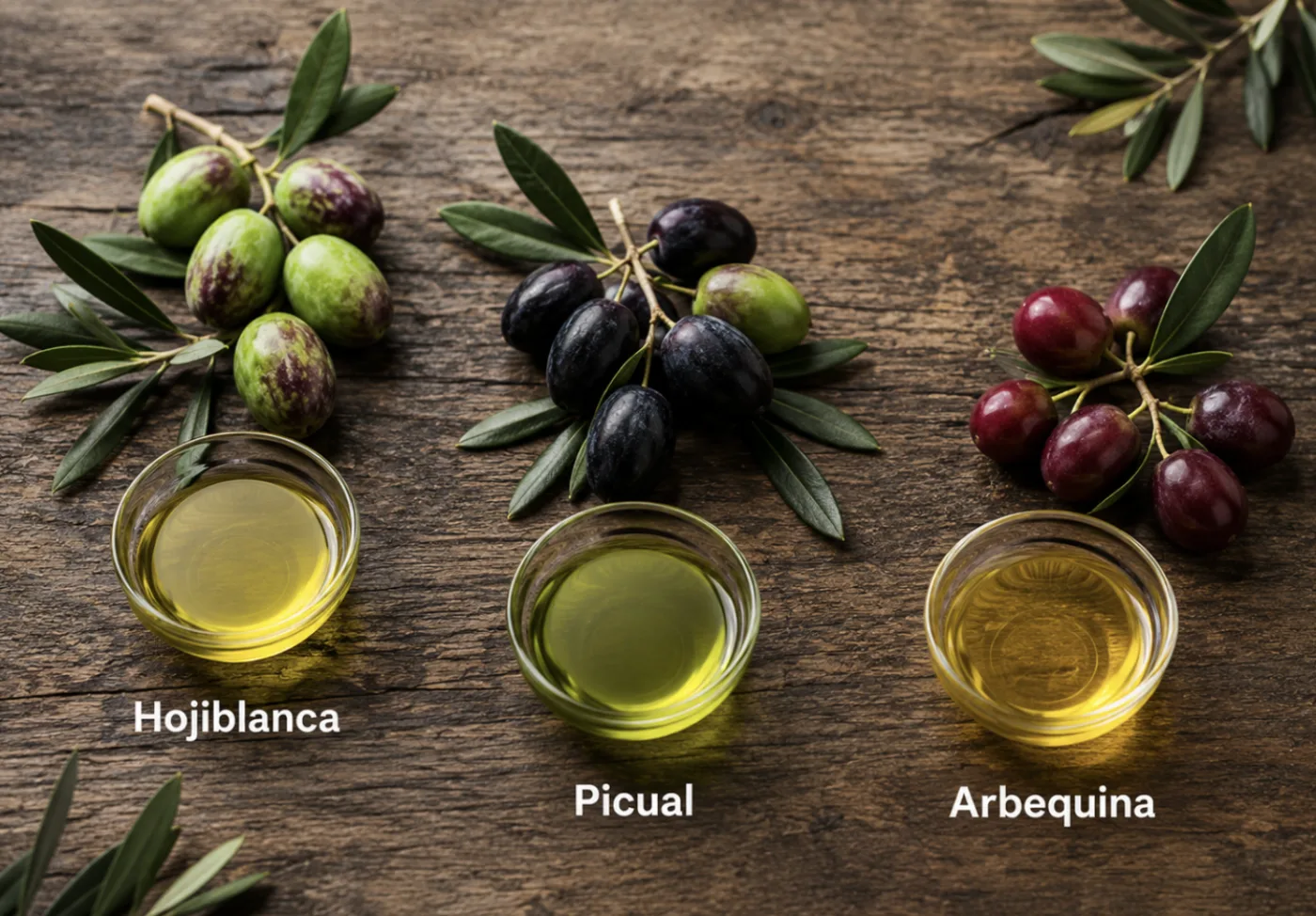
What it tastes like: Picual is the powerhouse. Expect intense, green, herbaceous aromas of freshly cut grass, tomato leaf, and fig wood, followed by a distinct bitterness and a peppery sting in the throat. That pepper isn't a flaw; it's the signature of a fresh, high-quality oil.
Color in the glass: Deep green when early-harvested, mellowing to a rich golden-green.
Why people love it: Picual is extremely high in oleic acid and polyphenols, which makes it one of the most stable olive oils you can buy. It resists oxidation, lasts longer, and holds up beautifully to heat, making it an excellent everyday cooking oil as well as a finishing oil.
Best for: Frying and roasting, drizzling over hearty stews and grilled meats, and anything that can stand up to a bold flavor.
Arbequina: Soft, Fruity, and Crowd-Pleasing
 Arbequina olives. Photo: Wikimedia Commons.

Where it's from: Originally from Catalonia in northeastern Spain. Arbequina adapts so well that it's now grown worldwide, but the Spanish original is still the benchmark.
What it tastes like: This is the gentle one. Arbequina is delicate, smooth, and buttery, with sweet, fruity notes of green apple, ripe banana, fresh almond, and a touch of artichoke. Very little bitterness and only a mild peppery finish.
Color in the glass: Pale golden yellow with soft green highlights.
Why people love it: Because almost everyone does. If you're introducing someone to real extra virgin olive oil, or if you find robust oils too aggressive, Arbequina is the easy entry point. The trade-off is a lower polyphenol content, so it's best enjoyed fresh.
Best for: Finishing salads, drizzling over fish and vegetables, baking (it shines in olive oil cakes), and dipping fresh bread.
Hojiblanca: The Balanced All-Rounder
 Hojiblanca olives. Photo: Wikimedia Commons.
.jpg)
Where it's from: Málaga, Córdoba, and Seville in southern Spain. The name means "white leaf," after the silvery underside of its foliage.
What it tastes like: Hojiblanca sits right in the middle of the intensity scale. It is beautifully balanced, with fresh-cut grass and green almond up front, sometimes a creamy avocado note, and a pleasant, slightly bitter and peppery finish that never overwhelms.
Color in the glass: Bright greenish-gold, leaning vivid yellow-green when fresh.
Why people love it: It's the versatile diplomat of olive oils: interesting enough for enthusiasts, approachable enough for everyday use. Hojiblanca olives are also "dual-purpose," prized both for oil and as table olives.
Best for: Just about everything, from salad dressings and grilled vegetables to soups, white fish, and all-day cooking.
& More: Other Spanish Varietals Worth Knowing
The "big three" cover most of what you'll meet, but Spain has more treasures:
- Cornicabra (central Spain, around Toledo and Ciudad Real). The second most planted variety in Spain. Aromatic and medium-bodied, with avocado and a balanced bitterness. Very stable. Oil color: golden with green tones.
- Empeltre (Aragón and the Ebro valley). Makes a famously clean, sweet, mild oil with almost no bitterness. Oil color: a clear, bright golden yellow.
- Picudo (Córdoba). Fragrant and sweet, with delicate notes of apple, exotic fruit, and almond. Oil color: golden with greenish reflections.
Single-Varietal vs. Blends
You'll see two kinds of bottles on the shelf:
- Single-varietal (monovarietal): made from one type of olive. These taste like the variety in its purest form, perfect when you want to actually experience what Picual or Arbequina is, much like a single-grape wine.
- Blends: a mix of varieties combined for a particular balance or consistency. A good blend can marry Arbequina's smoothness with Picual's backbone.
Neither is "better." Single-varietals are the best way to learn your palate; blends can be wonderfully balanced and reliable. Once you know the individual varieties, you'll understand exactly what a blend is trying to do.
Which Spanish Olive Oil Is Right for You?
| Variety | Intensity | Flavor Profile | Oil Color | Best For |
|---|---|---|---|---|
| Picual | Bold | Peppery, grassy, fig, tomato leaf | Deep green to golden-green | High-heat cooking, hearty dishes, longevity |
| Arbequina | Mild | Buttery, apple, banana, almond | Pale golden yellow | Salads, baking, fish, beginners |
| Hojiblanca | Medium | Green almond, grass, avocado | Bright greenish-gold | Everyday all-purpose use |
| Cornicabra | Medium | Avocado, aromatic, balanced | Golden with green tones | Versatile cooking, stable storage |
| Empeltre | Mild | Sweet, soft, almond | Clear golden yellow | Delicate dishes, breakfast toast, beginners |
If you're new to good olive oil, start with Arbequina or Empeltre. If you cook a lot and want one bottle that does everything, reach for Hojiblanca. And if you love that bold, peppery bite and want the most antioxidants for your money, Picual is your oil.
The Real Secret: Variety and Freshness
Here's the part most labels won't tell you. Even the finest Picual or Arbequina is only as good as it is fresh. Olive oil is a fruit juice, and like any juice it fades over time. Always look for a harvest date (not just a "best by" date), choose oils sold in dark glass or tin that protect against light, and use them within a year or so of pressing.
When you combine a great Spanish variety, a single estate you can trace, and a recent harvest, you finally taste what olive oil is supposed to be: vibrant, aromatic, and alive, nothing like the flat, greasy stuff most people grew up with.
Curious which variety is in your bottle right now? Pour a little, warm the glass in your hand, and take a sniff. After reading this guide, you might be surprised by how much you can already tell.